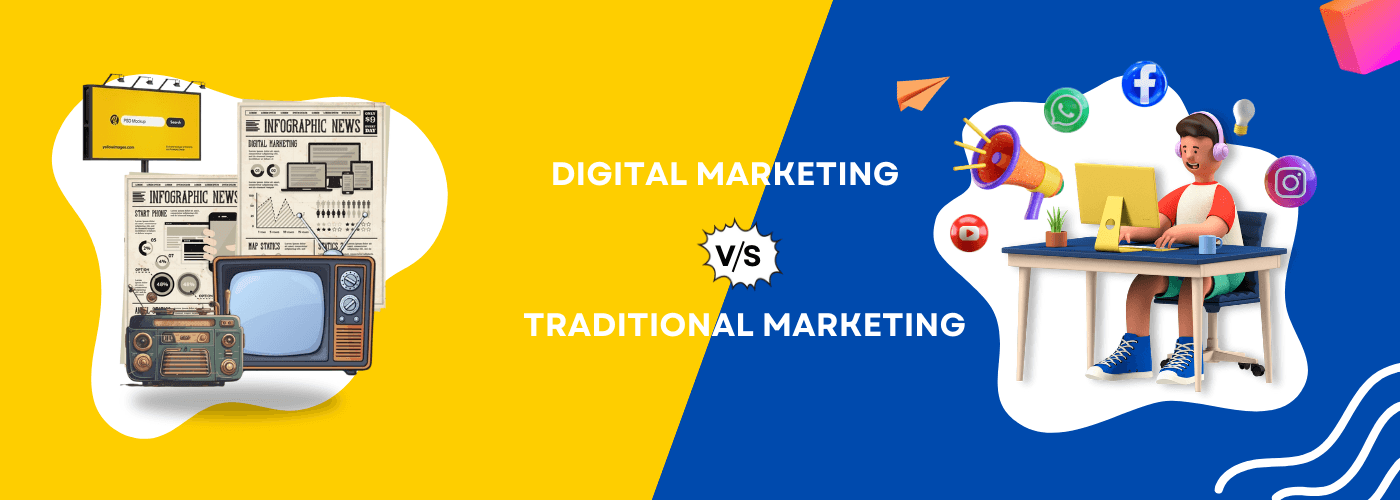
Digital Marketing vs Traditional Marketing
A clear comparison of digital and traditional marketing based on cost, reach, targeting, and ROI—helping you choose the right strategy for modern business.
Digital marketing is the component of marketing that uses the Internet and online-based digital technologies such as desktop computers, mobile phones, and other digital media and platforms to promote products and services.
On the other hand, Traditional marketing is any form of marketing that uses offline media to reach an audience. Examples include newspaper ads, billboards, mail advertisements, TV, and radio advertisements.
The main difference between digital and traditional marketing is the medium through which an audience encounters a marketing message. While traditional marketing uses media like magazines and newspapers, digital marketing utilizes social media, websites, and other online platforms.
Traditional Marketing Channels Include
Pros:

Cons:
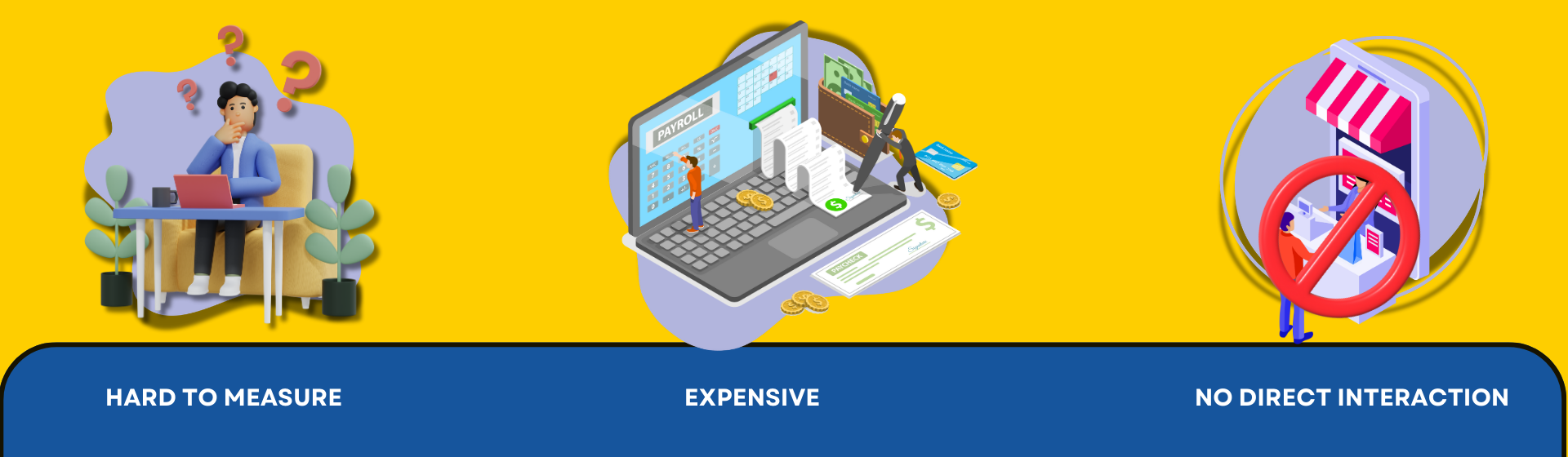
Traditional Marketing Done through:
- Outdoor (Billboards, bus/taxi wraps, posters, etc.)
- Broadcasting (TV, Radio, etc.)
- Print (Magazines, newspapers, etc.)
- Direct Mail (Catalogs, flyers, etc.)
- Telemarketing (Phone, text messages, etc.)
- Window displays and signage
Digital Marketing Channels Include
Pros:

Cons:
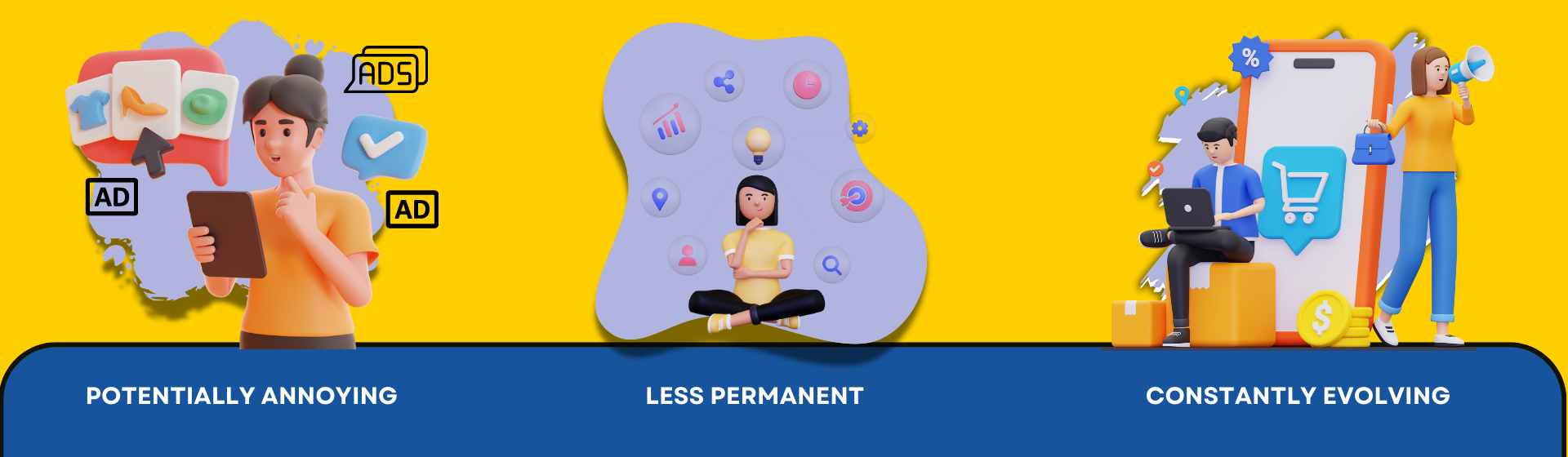
Digital Marketing Done through:
- Social media (Facebook, Instagram, LinkedIn, etc.)
- Websites & blogs
- Content marketing
- Affiliate marketing
- Email marketing
- PPC (Pay Per Click)
- SEM (Search Engine Marketing)
- SEO (Search Engine Optimization)